

Close Menu
Grow Like Grandad
  • The Allotment
    • Eating & Recipes
    • Life & Community
    • Pests & Diseases
    • Planning & Digging
    • Soil & Nutrients
    • Sowing & Growing
  • The Garden
    • Design & Planning
    • Pests & Diseases
    • Soil & Nutrients
    • Sowing & Growing
  • Health & Outdoors
  • Inspiration
    • Allotment Fashion Week
    • History
    • Medieval Grow Your Own
    • Volunteering
  • Recent Photos
  • About Matt Peskett
  • Contact Matt
  • Learning
Instagram Bluesky Facebook Threads
Grow Like GrandadGrow Like Grandad
Matt's IMDB Lists
  • The Allotment
    • Eating & Recipes
    • Life & Community
    • Pests & Diseases
    • Planning & Digging
    • Soil & Nutrients
    • Sowing & Growing
  • The Garden
    • Design & Planning
    • Pests & Diseases
    • Soil & Nutrients
    • Sowing & Growing
  • Health & Outdoors
  • Inspiration
    • Allotment Fashion Week
    • History
    • Medieval Grow Your Own
    • Volunteering
  • Recent Photos
Instagram Facebook Bluesky Threads
Grow Like Grandad
Home » Parsnips: Medieval Grow Your Own
Parsnips - Medieval Grow Your Own
Health & Outdoors

Parsnips: Medieval Grow Your Own

Matt PeskettBy Matt PeskettMarch 4, 20184 Mins Read
Share
Facebook Twitter LinkedIn

Looking for grow your own tips? These ones are between one and two thousand years old, passed on from the ancient Greeks, Romans and Persians. They were collated in 1306 by an Italian called Pietro Crescenzi in his book, the Ruralia Commoda. These tips have been translated into modern day English from Latin and Italian exclusively for Grow Like Grandad. If you’d like to know more about the background to this translation project see here.
[Note. my comments are displayed in red below]

[hr gap=”5″]

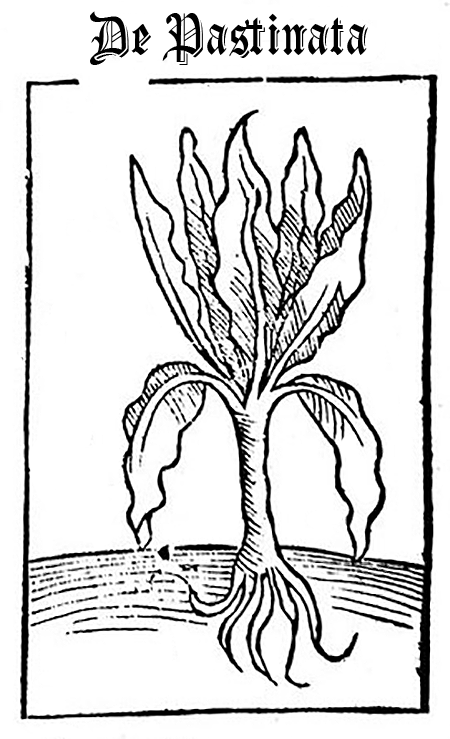
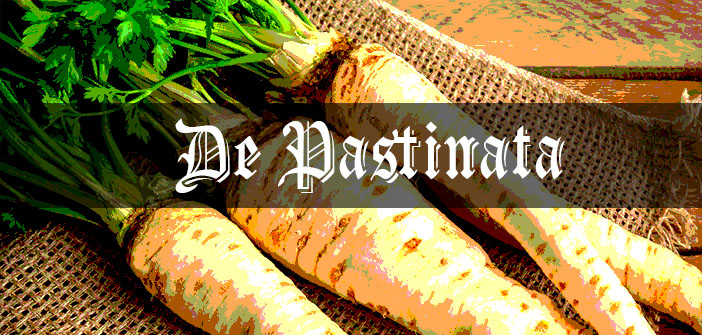
Parsnips (De Pastinata)

The Parsnip – Ruralia Commoda

Parsnips are sown in the month of December, January [in Italy where it’s warmer], February and March, in loose earth, trenched and optimally worked [what Monty Don would call ‘a fine tilth’]. They come in two varieties, domesticated and wild. Each has ‘difficult’ nourishment in its roots, and nourishes less than the turnip.

The parsnip root has some sharpness in its flavour, so it makes one thin [weight loss] and it prompts perspiration, however it also provokes menstruation and urine. It has some inflammatory virtues, through which it helps coitus [possibly falling pregnant], and when eaten repeatedly generates non praiseworthy blood [literally they thought that it is not good for your blood]. So, in order to get it to good temperament, it is good to simmer it twice, and, once the water has been thrown away, to cook it three times.

Wild parsnip is also known as dauco asinino, whereas the domesticated one as dauco cretico [neither variety exists by name today, daucus is the carrot family of which parsnip is closely related]. According to Isaac [son of Abraham], their root is hot in the middle of the second degree [it dissolves bodily obstructions], and moist in the middle of the first [decongesting]. However, according to others [Romans and Greeks], leaves and flowers are hot and dry in the third degree [raises heat to drive out a fever], and they are interchangeable when put in medicines since they almost have the same virtues. Yet the domesticated one is better.

There is also another variety of parsnip: this is red, and can be eaten raw. And when cooked with rapeseeds it makes wonderful compounds embellished by red colour; and is sown like the other parsnips [Quite possibly a beetroot OR red carrot ‘Dragon Purple’ Carrot‘ which comes from the Middle East – available from Real Seeds].

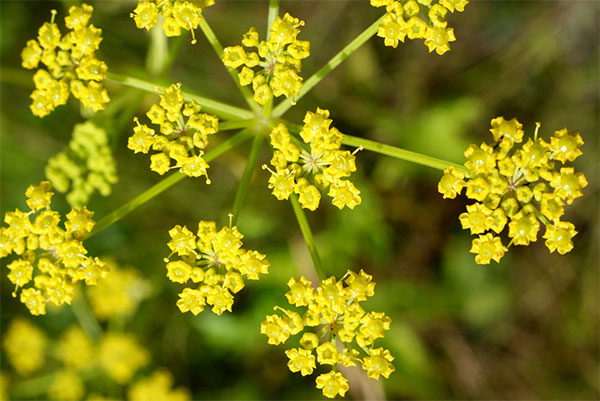
Wild Parsnip

Wild parsnip is especially effective and useful for its leaves and flowers, but little for its roots. This herb must be picked when it produces flowers, and, once the roots are thrown away, it must dry out in a shady place and it is stored for the whole year; it has dissolving, consuming and attracting virtues. In its quality, it is diuretic for its thin substance.
Wild Parsnip
Wild Parsnip

Medicinal Parsnip Uses:

  • Against cold rheum [a runny nose], put bags containing hot powder of this herb on the head.
  • Against stomach-ache due to wind or coldness, against strangury [blocked bladder] and dysuria [cystitis], and against colic and iliac passion, give the wine in which it will be cooked, and a great quantity of this herb decocted [heated/boiled] in wine and oil, and put it on the aching place.
  • Against strangury, dysuria and kidney stone give the wine of the parsnip and saxifrage seed decoction.
  • Against liver and spleen obstruction due to a cold cause, and against hydrops [excess fluid], make a syrup with fennel juice and that of parsnip’s decoction.
  • Against spleen and liver hardness, put a great quantity of the herb in wine and oil and let it macerate [soften/soak] for ten days, and on the tenth day cook it until it is reduced to oil, and press the herb optimally; then take the strained liquid and put in on the fire, and, once wax is added, make a wax-salve, which is very good against the aforementioned things.

The four degrees of ancient medical herbalism – click to enlarge[hr gap=”5″]

That concludes this translation of Latin and old Italian text from the Ruralia Commoda. Stay tuned for the forthcoming herb and vegetable translations over the coming days and keep an eye on #MedievalGrowYourOwn on Twitter.

Previous ArticlePumpkins, Squash & Gourds: Medieval Grow Your Own
Next Article Turnips: Medieval Grow Your Own
Matt Peskett
  • Website
  • Facebook
  • Instagram
  • LinkedIn

Matt is a web publishing and digital marketing consultant who in his free time enjoys allotmenteering and gardening. Horticulture is in the family genes (hence the socials name grow like grandad) and Matt has been growing his own vegetables since he was 7 years old. He also had a mad few years tweeting anonymously as Monty Don's dog Nigel from Gardeners World.

Read Similar Stories

My blood cancer diagnosis, big pumpkins and hospital fundraising

September 26, 2025

The guilt of lockdown happiness

April 24, 2020

Phototoxicity – Beware the plants that burn!

October 18, 2019

growlikegrandad

Chair of #Dorking Allotment Assoc and Westcott Gardeners' Club | Grower of 677lbs pumpkins | 27 yrs in digital | Hodgkin Lymphoma survivor

Frost damaged potatoes across the allotments this Frost damaged potatoes across the allotments this week. Luckily I started late, mine still mostly sleeping. #allotmentlife
Double insulation for the big marrow and cloches f Double insulation for the big marrow and cloches for sweetcorn and potatoes. #frost
#allotment
There's been a free woodchip shortage at the allot There's been a free woodchip shortage at the allotment so I picked myself up 12 compost bags of stuff locally. Somewhat covered in shavings now. Time to drop off and get the plastic cloches out for frost protection.
#allotment
My Silver Anniversary @waterperrygardens roses see My Silver Anniversary @waterperrygardens roses seem to have adusted well to life in my garden. Well timed blooms after the spring bulb display. #roses
A successful plant sale at the community garden be A successful plant sale at the community garden behind @westcottvillagehub three car loads, all grown by two brilliant @westcottgardenersclub members. All we were left with was a tray of cabbages and 42 tomato plants. #plantsale
A bit of cover for the #giantmarrow - just been a A bit of cover for the #giantmarrow - just been a bit below average temps lately, so hoping to keep it greenhouse happy.
#giantveg #allotment
Giant marrow plant is free. 233.7 Baggs 2025 #allo Giant marrow plant is free.
233.7 Baggs 2025
#allotment #giantveg
And I've no idea why two beautiful #hydrangeas wer And I've no idea why two beautiful #hydrangeas were reduced to £10 each, but they have exactly the succession colour I'm looking for out front after the end of spring bulb season and arrival of leaves on the cherry blossom #partialshade
I only went for 2 bags of compost. Stumbled across I only went for 2 bags of compost. Stumbled across the £2 and £3 @hilliergardencentres reductions on summer flowers.
#gladiolis #echinacea #crocosmia
Comfrey is another useful weed and the ladybirds a Comfrey is another useful weed and the ladybirds are also fans of it.
#ladybirds #comfrey #allotment
Follow on Instagram
GrowLikeGrandad © 2026. All Rights Reserved | Website by Firetop Ltd

Type above and press Enter to search. Press Esc to cancel.