


Close Menu
Grow Like Grandad
  • The Allotment
    • Eating & Recipes
    • Life & Community
    • Pests & Diseases
    • Planning & Digging
    • Soil & Nutrients
    • Sowing & Growing
  • The Garden
    • Design & Planning
    • Pests & Diseases
    • Soil & Nutrients
    • Sowing & Growing
  • Health & Outdoors
  • Inspiration
    • Allotment Fashion Week
    • History
    • Medieval Grow Your Own
    • Volunteering
  • Recent Photos
  • About Matt Peskett
  • Contact Matt
  • Learning
Instagram Bluesky Facebook Threads
Grow Like GrandadGrow Like Grandad
Matt's IMDB Lists
  • The Allotment
    • Eating & Recipes
    • Life & Community
    • Pests & Diseases
    • Planning & Digging
    • Soil & Nutrients
    • Sowing & Growing
  • The Garden
    • Design & Planning
    • Pests & Diseases
    • Soil & Nutrients
    • Sowing & Growing
  • Health & Outdoors
  • Inspiration
    • Allotment Fashion Week
    • History
    • Medieval Grow Your Own
    • Volunteering
  • Recent Photos
Instagram Facebook Bluesky Threads
Grow Like Grandad
Home » Great Dixter Study Days – 10 things I learned
Design & Planning

Great Dixter Study Days – 10 things I learned

Matt PeskettBy Matt PeskettMarch 6, 20174 Mins Read
Share
Facebook Twitter LinkedIn

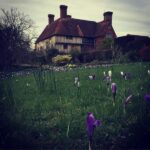
The gardens of Great Dixter are without doubt my favourite. Dixter has a unique charm and character; it is alive, a continual work in progress, from the experimental planting combinations through to the handful of busy gardeners that flit about like butterflies quickly moving from one bed to the next.

Following on from last July’s ‘Behind the scenes’ tour I decided to book a few 2017 study days with Head Gardener Fergus Garrett. So far I have attended two such days (each attended by around 30 people) and written below are five key notes that I took away from each day. These notes give a flavour of the style of planting at Dixter and the sort of topics you might learn about on a study day. There was a slight cross-over between the two days but I found that to be very helpful as it reiterated a few important things… and as I approach forty my memory isn’t what it was!


Preparing the Garden
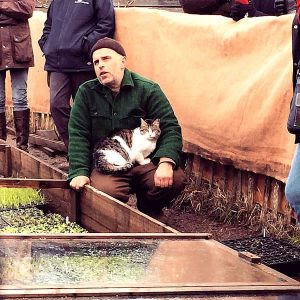
Head Gardener – Fergus Garrett
  • You don’t have to clear spent perennials at the end of autumn, you could leave the seed heads standing. Not only do these enhance winter scenery when all is brown and frosty, but they provide food for wild-birds and habitat for hibernating insects. For planning purposes these dead stems and seed heads remind a gardener of what grows where. This is important for inter-planting of bulbs and self sowers without damaging unseen perennials below ground.
  • Apply mulches of organic mushroom compost (be sure that it is organic) and/or horse manure around beds and ‘tickle it in’ with a small fork to maintain good soil conditioning. Add fish blood and bone in the spring.
  • Prune back some plants hard – such as Cotinus (smoke bush) if you just want foliage for the year ahead. Prune back climbers that may be taking over another host plant to its detriment.
  • Sow seeds in trays in September/October inside glass frames to save time and money in the spring. Many plants will germinate before winter and remain dormant under protective glass. Experiment to see what grows and resists frosts. The extra head start in spring (from early sowing) can improve efficiency in a large garden like Great Dixter.
  • Self sowers that appear in beds can be pricked out and potted up into cold frames to over winter as well or they can be relocated / thinned out.
[hr gap=”10″]

Succession Planting

Fergus Garrett, Great Dixter
Head Gardener – Fergus Garrett
  • Plan a long season border which has a continual life throughout the year to please the eye. The border will need both ‘furniture’ (structural perennials / foliage) and flowers.
  • Select plants that flower at different times to extend the flowering season and give a constant burst of colour in splashes that succeed each other. Also look out for flowers with long flowering periods of several weeks or months (Geranium Orion) rather than those that flower for a few days (Opium poppies). This makes life easier for gardeners by reducing the burden on continual change.
  • Although the big flower shows typically present overflowing gardens of flowers, don’t cram plants together. Give plants enough space to grow or they will smother each other, leave gaps between them (‘No Man’s Land’). This provides space for inter-planting when perennials are dormant (snow drops for example flower in Jan/Feb) without impacting on sunlight needed by perennials. It also leaves space for larger bulbs like tulips or alliums or for weaving in self-sowers from other areas of the garden.
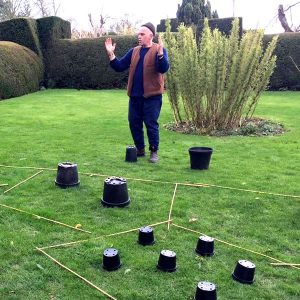
  • Lay canes on the floor of beds to mark out areas dedicated to specific plants and the gaps between them, mock up a full size bed on a lawn to scale in order to get accurate estimates on required plant volumes per mini-bed.
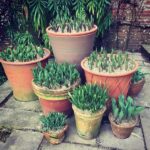
  • Foliage vs foliage; remember that it’s not all about flowers vs flowers, think about contrasting leaf shapes and patterns as well when choosing and placing plants. This goes for pots too; pots of greenery can be mixed with more traditional floral pots to provide an interesting dispay.

I am now thinking about my garden plans for late 2017; once I have completed the formal Italian garden that I’ve been constructing in our high garden, I shall need to plan an acid and shade loving long season bed for our front garden using the techniques that I have learned from Fergus.

You can find details of Great Dixter study days, behind the scenes tours and other events at www.greatdixter.co.uk/whats-on/

Previous ArticleRetaining Walls: Marshalls Croft Stone Walling
Next Article Seaweed – too many benefits to be ignored by plant growers
Matt Peskett
  • Website
  • Facebook
  • Instagram
  • LinkedIn

Matt is a web publishing and digital marketing consultant who in his free time enjoys allotmenteering and gardening. Horticulture is in the family genes (hence the socials name grow like grandad) and Matt has been growing his own vegetables since he was 7 years old. He also had a mad few years tweeting anonymously as Monty Don's dog Nigel from Gardeners World.

Read Similar Stories

Planting for Pollinators – The RHS Chelsea 2022 Feature Garden

May 13, 2022

Leonardslee Gardens, Loder’s Sussex Jewel Reopened

May 25, 2019

The Great War’s Lost Gardeners

November 9, 2018

growlikegrandad

Chair of #Dorking Allotment Assoc and Westcott Gardeners' Club | Grower of 677lbs pumpkins | 27 yrs in digital | Surviving Hodgkin Lymphoma

I'm going with a giant marrow this year. Giving pu I'm going with a giant marrow this year. Giving pumpkins a miss.
I'm willing to bet that there are many more Reform I'm willing to bet that there are many more Reform voters behind 'traditional Eastbourne carpet gardens'. Stick it in the manifesto after smoking in pubs and hairdryers in the bathtub.
The glamorous world of hedge cutting. Tasks like t The glamorous world of hedge cutting. Tasks like this seem an odd thing to ever prioritise again after 2 years of cancer treatment, but needs must. That's life I suppose.
Japanese cherry blossom at home, always a delight. Japanese cherry blossom at home, always a delight. #shirotaecherryblossom #shirotae
Planted out some onions, put down cardboard and wo Planted out some onions, put down cardboard and woodchip for a new path and dug in two rows of King Edwards. Last year's giant pumpkin patch is nice and easy to turnover and full of goodness. Next another row of King Edwards and some Maris Pipers. All to the faint roaring sound of the Dorking FC fans at the stadium in town.
#allotment
A #rhododendron we bought at #caerhayscastle in 20 A #rhododendron we bought at #caerhayscastle in 2021 between lockdowns. It was small then, I moved it last autumn and loaded it up with ericaceous compost. Much happier in its new position. Fragrant too.
Hailstorm survivors #tulips Hailstorm survivors
#tulips
"Let me back in please, it's horrible out here" #c "Let me back in please, it's horrible out here"
#catsofinstagram
The cat, in our garden cabin, is giving me 'rainy The cat, in our garden cabin, is giving me 'rainy chalet in Yarmouth' vibes.
#catsofinstagram
Something new I've started cooking in 2026 is Chic Something new I've started cooking in 2026 is Chicken & chorizo jambalaya. I'm not sure how I made it to 49 years of age without it before now, not much harder to make than a spag bol, bit less work than a shepherd's pie.
Follow on Instagram
GrowLikeGrandad © 2026. All Rights Reserved | Website by Firetop Ltd

Type above and press Enter to search. Press Esc to cancel.